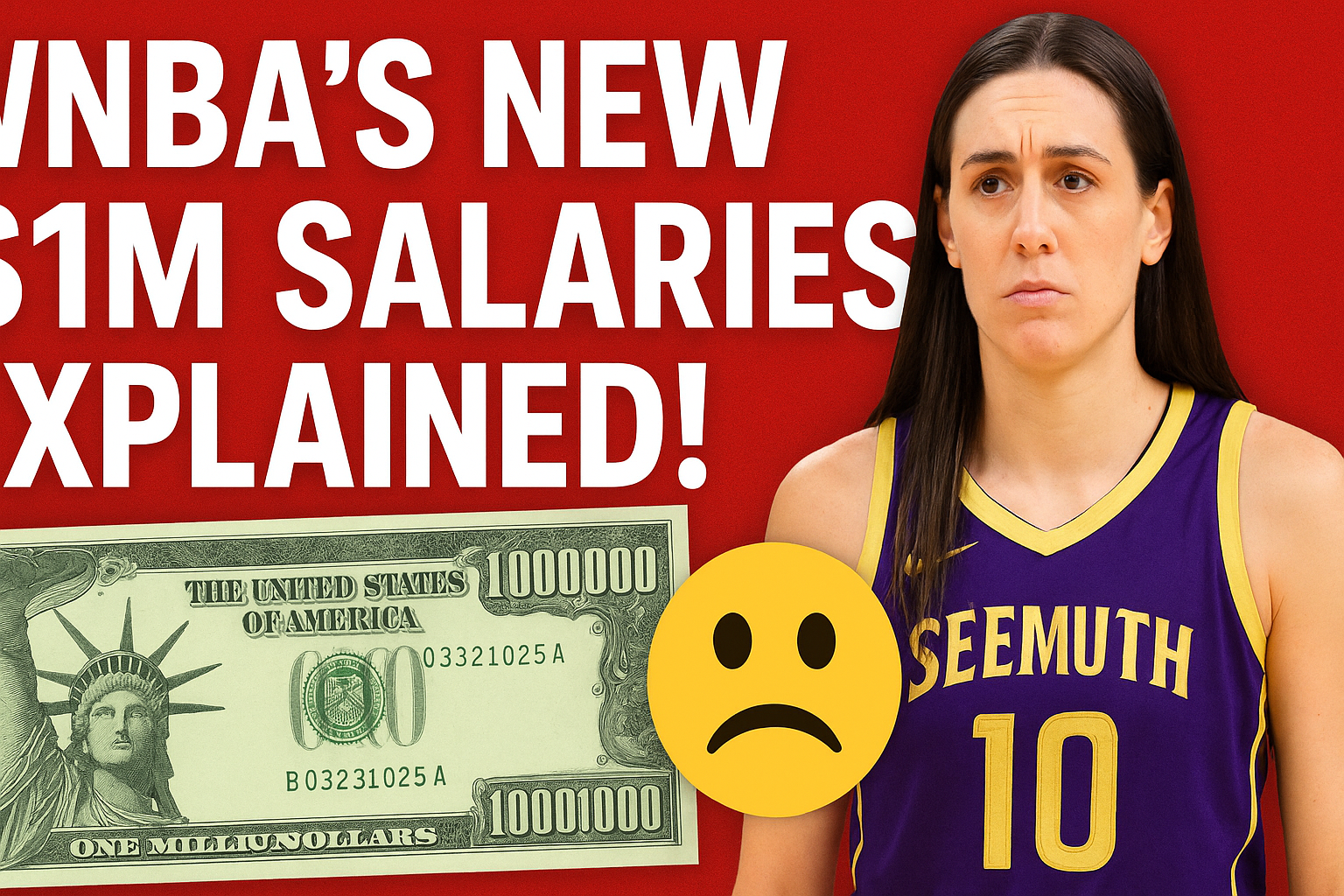
The WNBA just dropped its most groundbreaking CBA proposal in league history — one that finally pushes player salaries into the million-dollar era. From massive increases in minimum contracts to supermax deals reaching unheard-of levels, this proposal signals a seismic financial shift. Stars like Caitlin Clark, A’ja Wilson, Breanna Stewart, and Sabrina Ionescu are now projected to earn over $1 million annually through combined salary, marketing bonuses, and league-funded compensation.
But here’s the twist:
Players aren’t celebrating.
Because despite the historic jump in pay, the one thing players have been fighting for most — real revenue sharing — still isn’t part of the deal.
Let’s break down exactly what the new CBA means, who benefits, and why the battle is far from over.
📈 The Biggest Salary Leap in WNBA History
The proposed CBA introduces the most aggressive salary increases the league has ever offered:
🔹 Supermax Contracts Hit New Heights
The top-tier salary category is expected to explode past previous limits. Under the proposal, star players could cross $300K–$400K+ in direct salary — before any bonuses or marketing deals.
When you add guaranteed league marketing incentives and team partnerships, top stars could easily reach seven-figure annual earnings.
🔹 Minimum Salaries Boosted Dramatically
The league is also lifting the floor, not just the ceiling:
- Vet minimums expected to jump significantly
- Rookie deals projected to rise to some of the highest the league has ever offered
- Bench players and role players seeing raises that actually match their workload
For the first time, WNBA players across the board are on track to make sustainable, competitive salaries.
💰 So… Who Actually Wins?
🏆 The Superstars
Players like Caitlin Clark and A’ja Wilson stand to gain the most. With larger salaries and bigger marketing guarantees, they’ll officially enter the million-dollar era, something fans and athletes have waited decades to see.
👊 Mid-Tier and Bench Players
This might be the biggest positive shift for non-superstars. With the minimum salary climbing, more players can earn a true living wage instead of relying on overseas play.
📺 The League Itself
By boosting salaries and improving compensation structures, the WNBA strengthens its public image, attracts more talent, and builds momentum for future expansion.
⚠️ Then Why Are Players STILL Unhappy?
Despite the historic numbers, players are frustrated — and for a very specific reason:
➡️ True revenue sharing is STILL missing.
The NBA gives players roughly 50% of basketball-related income.
The WNBA? Still nowhere close.
Even with the new salary boosts, players argue that:
- Their compensation doesn’t reflect the massive boom in viewership
- Increased revenue from media deals, sponsorships, and attendance isn’t reaching them
- The league continues to control the majority of basketball income without transparent profit-sharing
In short:
Players want a partnership — not handouts.
🔍 Why the Union Isn’t Ready to Sign
The WNBA Players Association (WNBPA) has been clear for years:
They want a CBA that gives athletes a fair percentage of league revenue, not just higher salaries.
From their perspective:
Higher salaries = good
But revenue sharing = long-term stability, growth, and respect
Without that, players feel the league is offering flashy raises without fixing the core issue.
🏁 Final Verdict: A Massive Step — But Not the Finish Line
The WNBA’s new CBA proposal is the biggest financial leap in league history, one that finally pulls player salaries into a modern era. The $1M-plus possibilities are real, the raises are massive, and the momentum is undeniable.
But the fight is far from over.
Players want fairness.
They want transparency.
They want their share of the revenue they’re helping generate.
Until the WNBA gives them that, the union will keep pushing — and the negotiations will stay heated.
