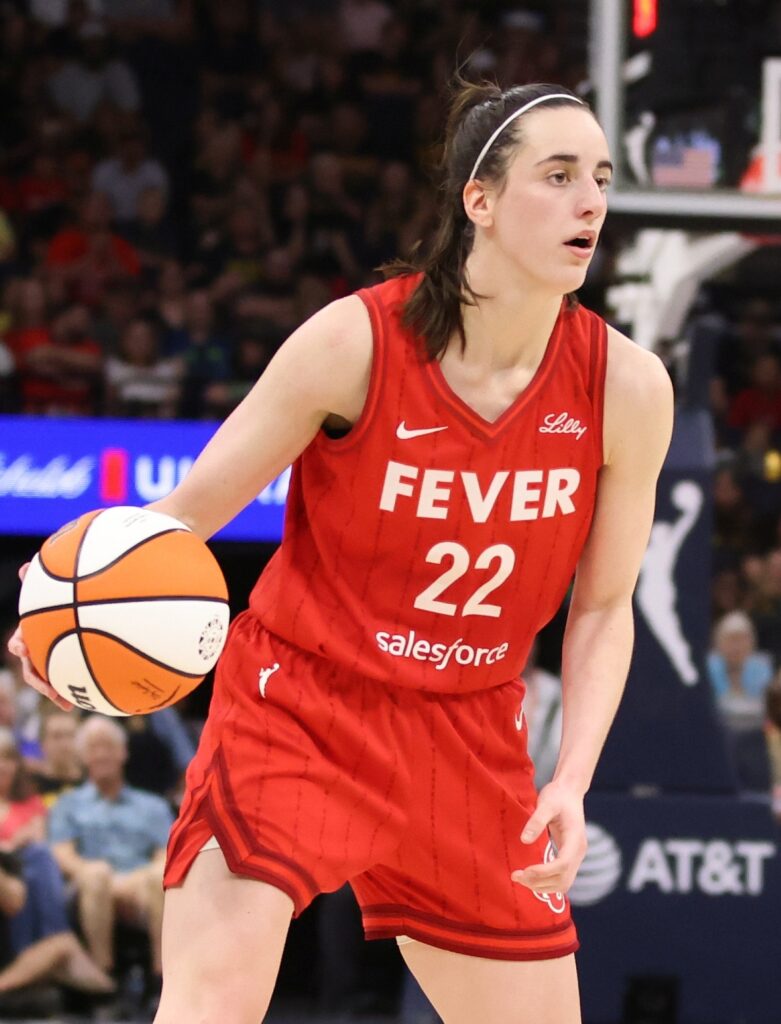
Caitlin Clark wasn’t benched because she struggled.
She wasn’t benched because she missed shots.
She wasn’t benched because she failed an assignment.
She was benched because of what her performance was forcing.
And that distinction changes everything.
The Practice That Ended Too Quietly
Practice ended early. No speech. No final huddle. No wrap-up.
That doesn’t happen by accident.
In high-level basketball environments, early endings signal one thing: something has shifted that can’t be fixed with another drill. The energy in the room had turned. Control—subtle, unspoken, but essential—was slipping.
Caitlin Clark walked off without a word. Not because she was frustrated. Not because she was confused.
Because she didn’t need to say anything.
This Was Never About One Drill
It’s easy to reduce moments like this to rotations or reps. That’s the comfortable explanation. The wrong one—but the comfortable one.
This wasn’t about:
- A missed defensive read
- Shot selection
- Who should be running the offense
This was about gravity.
When a player performs at a level that bends the room around her—forcing teammates to adjust, coaches to react, and systems to stretch—pressure moves upward. Suddenly, decisions feel heavier. Authority feels tested. Expectations rise instantly.
That’s when tension enters.
When Performance Creates Pressure, Not Problems
Greatness doesn’t always disrupt by failing. Sometimes it disrupts by exposing limits.
Clark’s presence raises questions that don’t have quick answers:
- Who does the offense truly run through?
- How much freedom is too much?
- Who adapts—the system or the star?
Those questions don’t announce themselves. They linger. They hang in the air. And everyone feels them at once.
Ending practice early wasn’t about punishment. It was about containment.
Control Slips Before Voices Rise
At this level, control rarely collapses loudly. It erodes quietly.
When a player’s excellence accelerates faster than the structure around it, something has to give. Sometimes that “something” is minutes. Sometimes it’s a pause. Sometimes it’s an early whistle and an empty gym.
That’s what this moment represented.
Not discipline.
Not doubt.
But recalibration under pressure.
Power, Pressure, and the Cost of Being Great
Caitlin Clark isn’t just playing basketball—she’s altering dynamics. That’s what elite players do. They force decisions. They compress timelines. They make neutrality impossible.
And when that happens, reactions are rarely clean.
Benching her wasn’t about reducing her impact.
It was about managing the consequences of it.
The Silence Said Everything
No confrontation. No explanation. No spectacle.
Just tension—and understanding.
Because everyone in that room knew this wasn’t about performance. It was about what her performance represents: a shift in gravity, authority, and expectation.
And moments like that aren’t loud.
They’re quiet.
Abrupt.
And unforgettable.
This wasn’t a setback.
It was a signal.
And it says far more about greatness under pressure than any stat line ever could.
