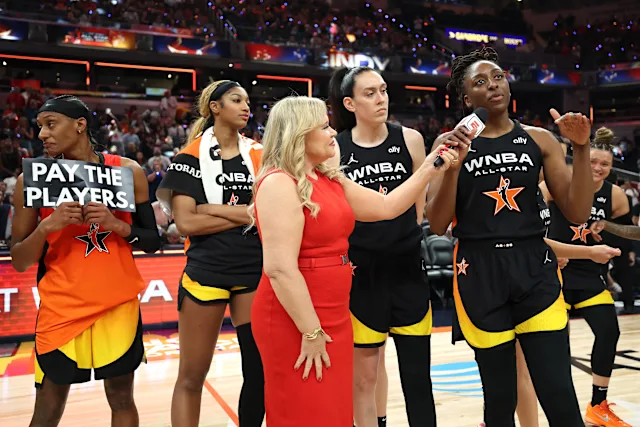
Here’s the part nobody is talking about.
On paper, the numbers were staggering. A massive majority of WNBA players voted to authorize a strike if negotiations derail. Headlines screamed leverage. Social media buzzed about power.
But once the dust settled, a quieter reaction emerged—confusion, skepticism, and a simple question fans keep asking:
What pressure does a strike actually create right now?
The Offseason Problem No One Wants to Admit
The WNBA isn’t in season.
There are:
- No games being played
- No tickets being sold
- No broadcasts generating nightly revenue
- No weekly momentum to disrupt
That matters—because strikes are most powerful when money is actively moving. When arenas are full. When advertisers are locked in. When fans are already watching.
Right now, there’s nothing to shut down.
That’s why, for many observers, the strike authorization feels less like a hammer and more like a warning flare.
Why the Finals Would’ve Changed Everything
If players wanted to create maximum leverage, the WNBA Finals would have been the nuclear option.
That’s when:
- Viewership peaks
- Media attention is guaranteed
- Sponsors are fully invested
- The league has the most to lose
A strike threat during the Finals would have forced immediate action. Pressure would have been unavoidable. Conversations wouldn’t be theoretical—they’d be urgent.
By comparison, an offseason strike authorization doesn’t interrupt revenue. It signals intent, but it doesn’t impose cost—at least not yet.
What This Vote Actually Does (and Doesn’t) Do
To be clear, this vote isn’t meaningless.
It does:
- Show rare player unity
- Put executives on notice
- Strengthen the players’ negotiating position on paper
But it doesn’t:
- Halt league operations
- Force short-term concessions
- Create public urgency among casual fans
That gap explains the muted reaction. Fans aren’t ignoring the issue—they just don’t feel the consequences yet.
Why Fan Reaction Has Been Lukewarm
Many fans expected a seismic moment. What they got instead felt procedural.
From the outside, it looks like:
- A move made far from the spotlight
- A threat with no immediate teeth
- A strategy that relies on future pressure rather than present disruption
Without games on the line, the emotional urgency just isn’t there. And in modern sports, emotion drives leverage as much as economics.
A Warning Shot—Not a Declaration of War
That may actually be the point.
This strike authorization feels less like a countdown and more like a strategic signal:
We’re unified. We’re serious. And we’re prepared—but not yet.
The problem is perception. When a threat doesn’t hurt immediately, it risks being interpreted as hollow—even if it isn’t.
Smart Leverage or Empty Threat?
Right now, it depends entirely on what comes next.
If negotiations accelerate and meaningful changes follow, this vote will be remembered as a smart, disciplined move made at the right moment.
If talks stall and the league calls the bluff, the offseason timing may be seen as a missed opportunity to apply real pressure.
Either way, one thing is clear:
This wasn’t the strike. It was the warning.
💬 Smart leverage—or an empty threat at the wrong time?
The answer will come when the season — and the money — come back.
